

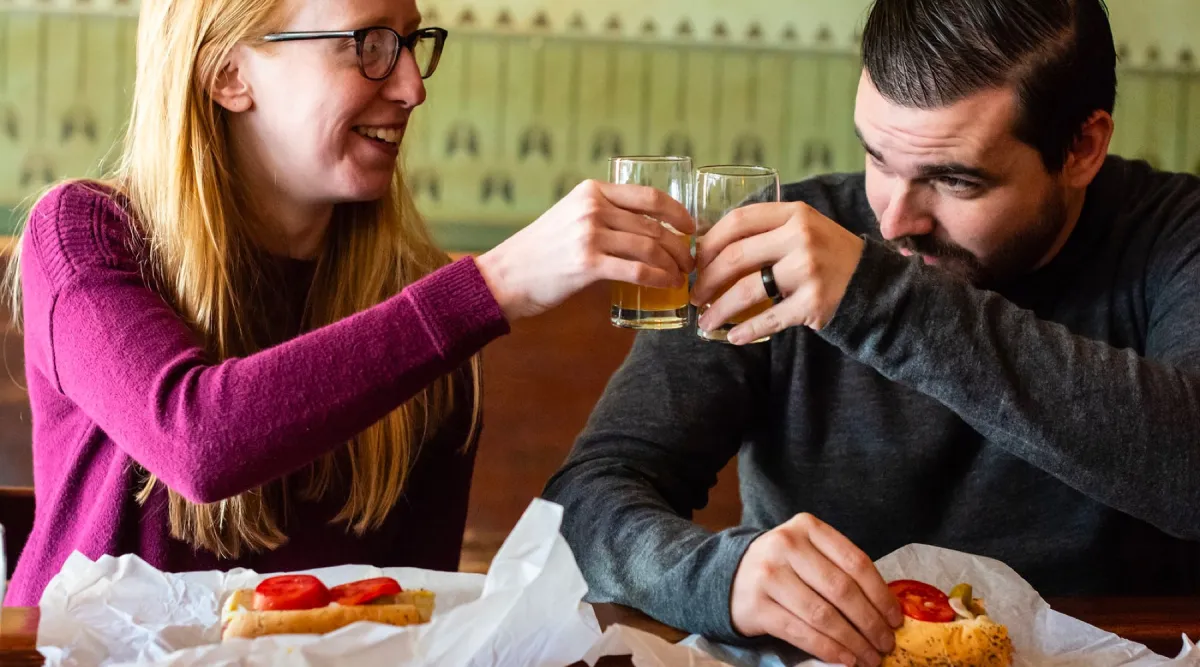
Food tours are the highest-engagement experience category in tourism. Every stop is a sensory peak. The table at stop three, where the guide explains why this neighborhood's version of the dish exists, is the moment. The kind of emotional high that makes guests want to tip generously, write a review, and tell people about what just happened. The question is whether operators capture what those moments generate.
The paper guidebook problem
Many food tour operators still use printed materials. These served a purpose for a long time. The problems are well documented by operators who have lived them.
"I have no interest in going back to paper copies. The biggest reason is logistics, getting them to guides when they run out. It is always an hour before the experience, never days in advance. Plus the waste of the paper, because I think a lot of people just end up tossing those. And then if anything changes, you are looking at reprinting costs or just telling people to ignore it, which I find to be highly unprofessional."
Alyssa Schoenfeld, Bites of Boston Food Tours
What guests actually want from a food tour is a record of what they tasted, guidance on where to go next, and a resource they can use after the experience ends. Paper rarely delivers this. A social media professional recently took a food tour in Mexico City, and when it ended, the guide sent the group a Google map with notes on every place they visited and further recommendations. Her reaction was exactly what every food tour operator wants from their guests.
"A social media person I am working with took a food tour in Mexico City recently. And she said when it was over, the tour guide sent everyone a Google map with where they went, with notes about each place and other recommendations. She really liked that."
Lesley Stracks-Mullem, Taste Carolina Gourmet Food Tours
A digital guidebook does this automatically. The guide does nothing extra. Every stop, every description, every recommendation is already in the guest's hand, and it stays there after the experience ends.
Features built for food tours
The food stop page type in Digital Guidebooks is distinct from a regular stop page. It includes the food item being tasted, what is included at that stop, and allergen information. The allergen field alone reduces pre-experience support volume significantly. Guests with dietary restrictions can check for themselves without emailing the operator. One food tour operator put it simply when she saw this field.
"Can it nudge my guests into telling me their dietary restrictions and food allergies prior?"
Lesley Stracks-Mullem, Taste Carolina Gourmet Food Tours
It is a fair ask, and dietary restriction management is exactly the kind of feature on the roadmap for an upcoming release. The allergen field is the first step: giving guests the information they need to feel confident about what they are eating, without the operator fielding individual emails.
The email capture gap
Food tours run in groups. One person booked. Four, six, or twelve people showed up. The operator has the email address of the person who completed the reservation. Everyone else disappears. For private groups and corporate experiences, this gap is even larger.
Chicago Food Tours increased their email capture rate by 79% after introducing a digital guidebook. Every guest who accesses the guidebook enters their email and self-selects as a local or a visitor. Two audiences with different lifetime values and different things worth saying to them. Locals get invited back, upsold on private and corporate group experiences, built into a long-term relationship. Visitors activate referral value and get pointed toward experiences in their home city.
"That would be huge, especially for private tours. I still do not have a way of collecting everyone's emails when a private group comes out."
Matt Schlizzi, City Food Tours Philadelphia
Tipping during the experience
Food tours have a tipping moment that is different from other experience types. Guides are managing pacing, dietary questions, group energy, and the logistics of moving twelve people through a busy neighborhood. Asking for a tip at the end verbally is awkward for everyone.
The guidebook puts the tip prompt at the right moment with suggested amounts based on the ticket price. Guides do not have to ask out loud. Digital tips average 10% higher than cash, and according to TripAdmit, 65% of people tip more generously with digital methods. The format removes the friction. The timing captures the feeling. Together they produce consistently higher gratuity for guides who are already doing excellent work.
The storytelling layer
Food tours do something few experience types can do: they take guests behind the scenes. Into kitchens, into prep areas, into relationships with vendors and chefs that took years to build. That context lives in the guide's head and in the verbal delivery. A digital guidebook puts it in the guest's hand.
"We do a back-of-house tour once a year with the executive chef. We cannot take our guests back there, but it would be really fun to do a video. Here is how many dishes they do. What does your soup pot look like? Here is the chocolate shop."
Karen Anderson, Alberta Food Tours
Video content at stops, historical photos, behind-the-scenes footage shot once and delivered to every guest. This is what elevates a food tour from a meal to a story guests tell when they get home. The guide's verbal delivery is the live performance. The guidebook is the record that travels with the guest and keeps the experience alive long after the last bite.
Frequently Asked Questions
Can I add allergen information to a digital guidebook?
Yes. The food stop page type in Digital Guidebooks includes a dedicated allergen field. Guests with dietary restrictions can check for themselves without emailing the operator, reducing pre-experience support volume significantly.
How do food tour operators collect guest emails?
Through a digital guidebook that requires an email to access. Every guest in the group enters their email, not just the person who booked. Chicago Food Tours increased their email capture rate by 79% after introducing a digital guidebook.
What is the best tipping solution for food tour guides?
A digital guidebook that puts the guide's personal payment links directly in the guest's hands during the experience. Guides do not have to ask out loud, and digital tips average 10% higher than cash.
Can I customize the guidebook for each food stop?
Yes. Each food stop page includes the food item being tasted, what is included at that stop, and allergen information. Guides can also add personal recommendations at each stop through their guide code.
See Digital Guidebooks built for food tour operators.
Plans start at $99 a month, and every one comes with a 60-day money-back guarantee.
View Pricing →