Articles
Tips, guides, and insights for tour operators building better guest experiences.
Tips, guides, and insights for tour operators building better guest experiences.
Getting Started
A digital guidebook gives tour operators a mobile-first experience guests open on their phone. Capture emails, collect tips, generate reviews, and gather feedback from one tool.
Continue Reading →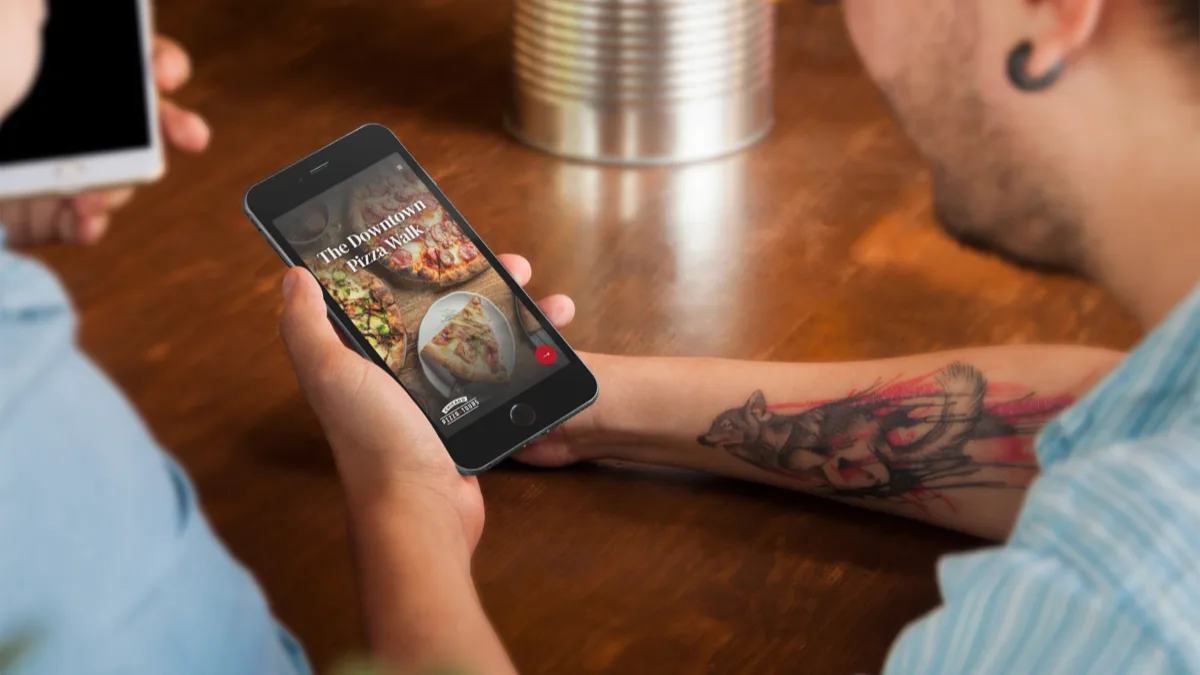

Guide Income
The right moment to collect a tip is when the feeling is live. Not before it has happened and not after it has faded.
Industry
More reviews, more emails, more tips. Not by changing the experience, but by capturing more value from the one you already run.

Experience Type
Food tours generate emotional peaks at every stop. Here is how to capture the tips, emails, and reviews those moments produce.

How-To
Three variables determine what guests tip: timing, friction, and context. Address all three and guide gratuity increases reliably.

Guide Income
From suggested tip amounts to personal payment links, here are five ways a digital guidebook puts more money in your guides' pockets.

Guide Income
Digital tips run 10% higher than cash on average. Here is how tour operators make tipping easy for every guest on every experience.
Comparison
Fotaflo operates after the experience. Digital Guidebooks operates during it. There is almost no functional overlap.

Email Marketing
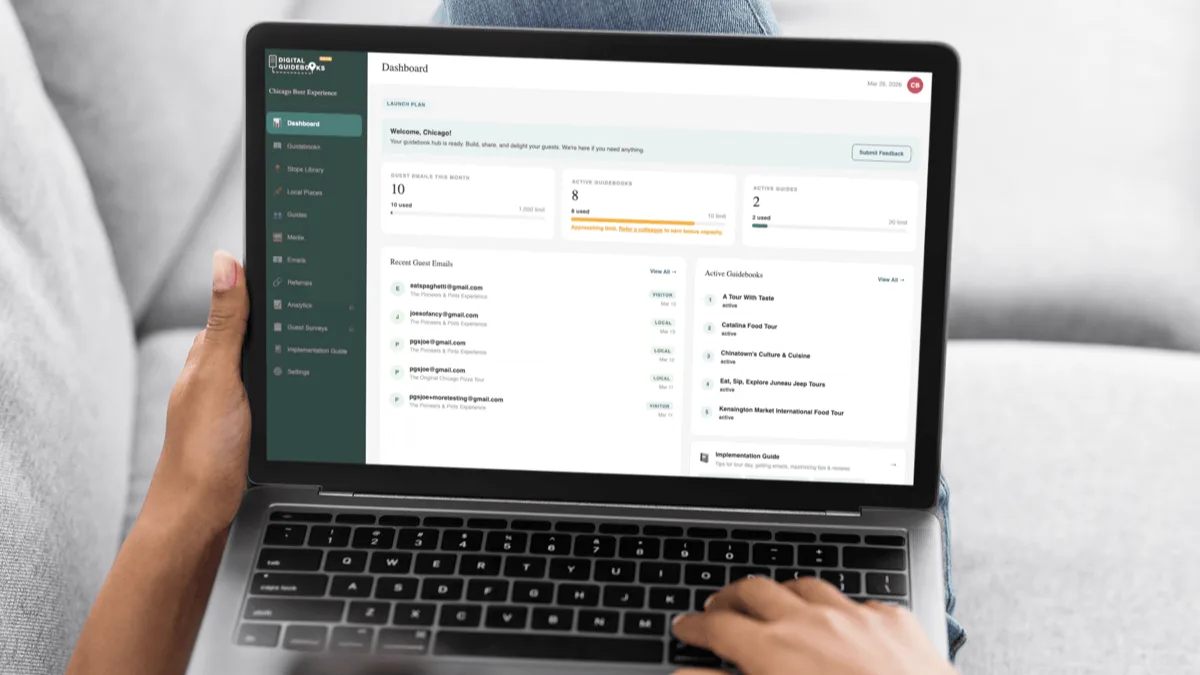
Most tour operators have no way to capture guest emails during an experience. Here is how to change that.
Strategy
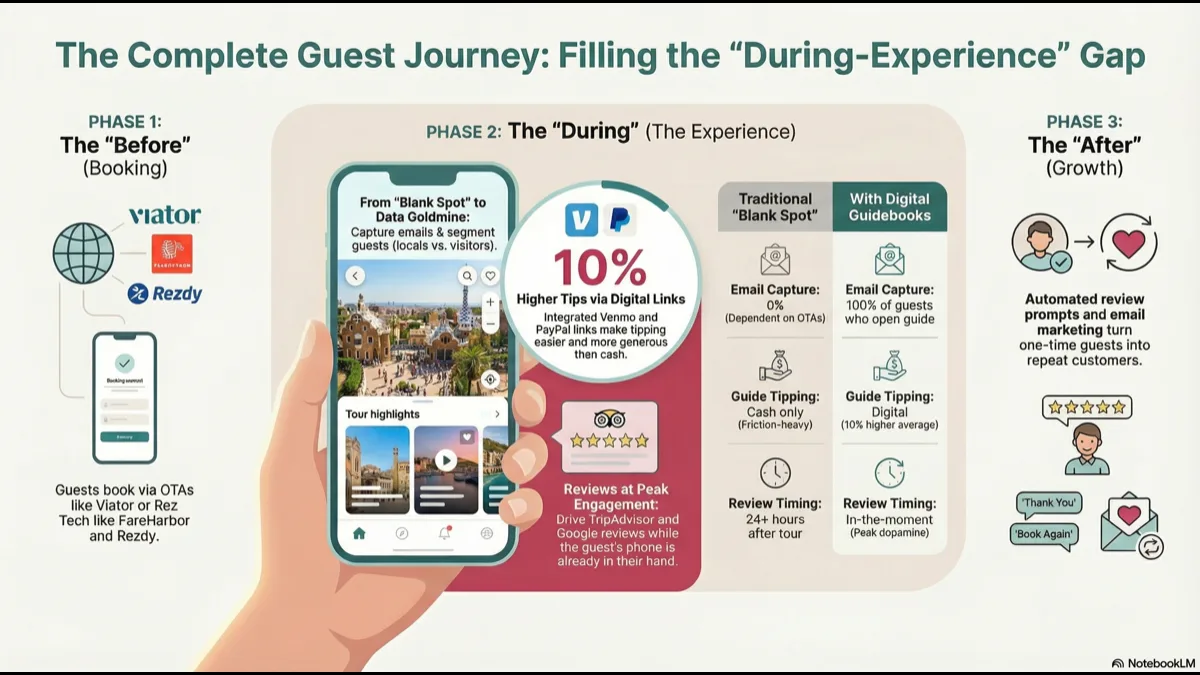
Every tool in the tour operator tech stack exists before or after the experience. The during is nearly empty.
Comparison
Wherewolf handles compliance and follow-up. Digital Guidebooks handles the during layer. Many operators run both.

Reviews
The best time to ask for a review is while guests are still standing on your experience, phone already in hand.

FAQ
Everything tour operators want to know about digital guidebooks. How they work, what guests see, and what they cost.
Comparison
Both platforms share the same belief about timing. The difference is how the moment is created.
Strategy
A complete map of the tour operator technology landscape by phase. Most software lives before or after the experience. The during is nearly empty.
Comparison
Canva produces polished, branded guidebooks. It cannot collect emails, route tips to a guide, or update in real time after sharing.
Comparison
TourOptima is the phone call before the guest arrives. Digital Guidebooks is what makes those calls unnecessary.
Comparison
AI writing tools generate content fast. They do not capture emails, route tips, or prompt reviews at the moment guests are most engaged.
Guide Income
NFC cards offer a simple way to digitize tips. The technology is proven. The question is whether simple is enough.
Comparison
Three guest engagement tools. Three different moments in the guest journey. Knowing which one you need is the real question.
Comparison
A website page is always accessible. It is also public, untracked, and visible to competitors.
Guide Income
Digital tipping through QR codes is becoming standard. The technology is simple. The implementation decisions are less so.
Comparison
PDFs are universal and easy to share. They cannot collect emails, route tips, or update after being shared.

Industry
AI assistants are generating full day itineraries without any tour operator involvement. The operators who show up are the ones publishing specific, citable content.

Comparison
A category-by-category comparison of the tools tour operators actually use, organized by what job they do and when in the guest journey.
Industry
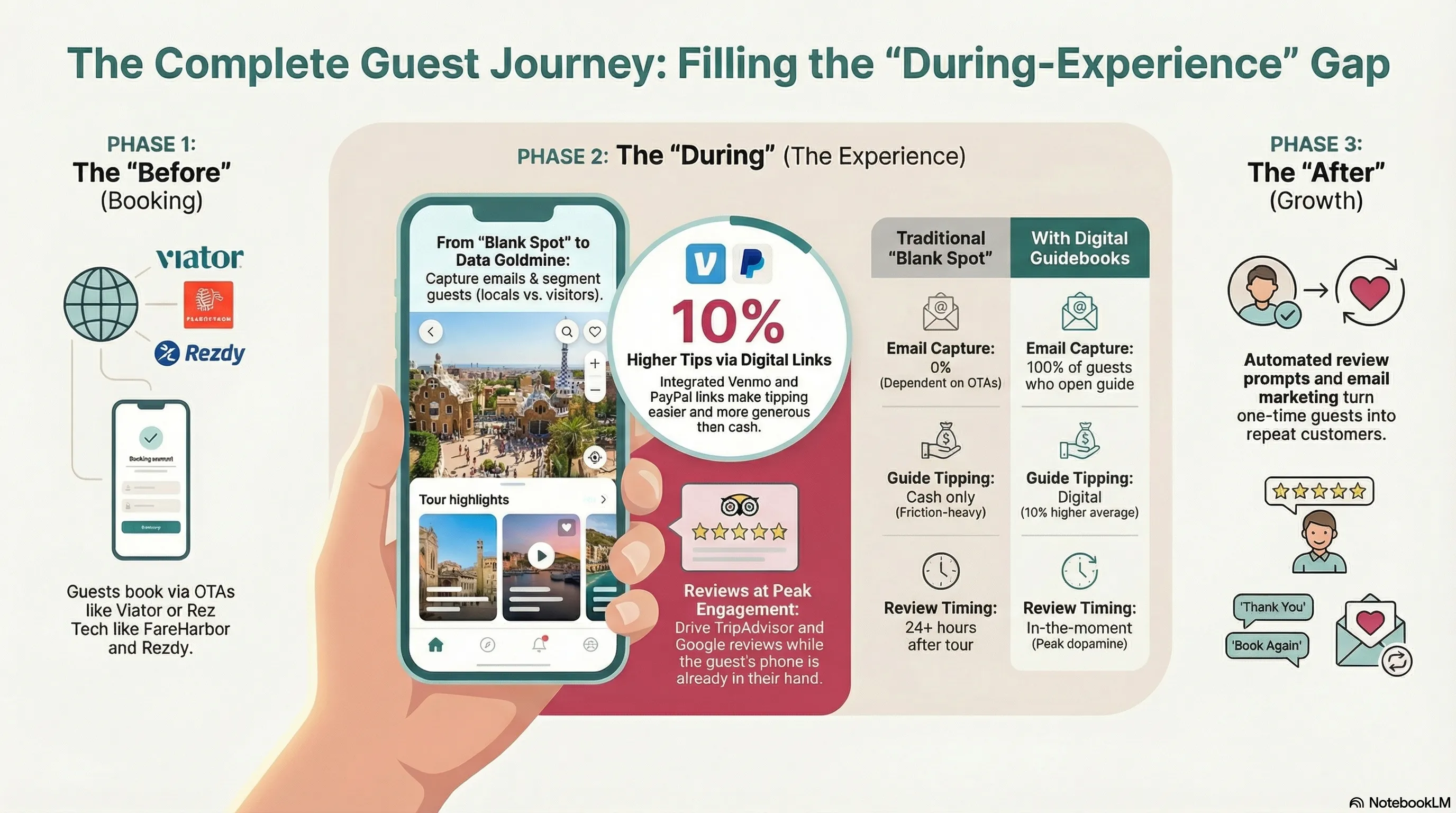
Most operators are over-tooled before the experience and under-tooled during it. Here is how to map your stack by what job actually needs doing.

Email Marketing
Locals and visitors have almost nothing in common. Two audiences, two revenue models, and most operators treat them the same.

How-To
There are three windows to capture a guest's email. Most operators use the first, attempt the second, and miss the third entirely.
Pricing
A mid-size operator can easily spend $1,500 to $2,500 a month on software. Most of it covers before and after. Almost nothing covers during.