


Most tour operators treat every email address they collect the same. A local who took the food experience last Saturday and a visitor from out of town who flies home tomorrow are in the same list, receiving the same follow-up email. This is a missed opportunity with compounding cost, because the two audiences have almost nothing in common in terms of what they will do next.
The local might book again in three months. They might bring their company's team for a private experience. They might become a regular who has done every route you offer. The visitor will probably never return to your city this year. But they will talk about what they did when they get home. They will recommend you to a friend planning a trip. Treating both audiences identically means every email you send is a compromise that serves neither well.
The gap most operators do not see
Before addressing what to do with a segmented list, it is worth naming the first problem: most operators are not capturing nearly as many email addresses as they think. One person books. Four, six, or twelve people show up. The operator has the email address of the person who completed the reservation. Everyone else disappears.
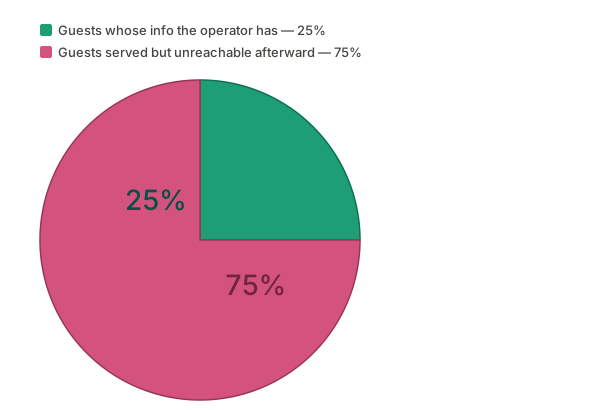
For a mid-market food experience operator running thousands of guests per year, only about a quarter of those guests have any contact information on file. That means roughly three-quarters of the people who showed up, had a great time, and might have come back or referred a friend are gone. The operator served them, delighted them, and has no way to reach them again.
"You see a group of four and one person bought tickets for that group of four. Now I am able to get the email address for hopefully all four, but at least two or three, instead of just the one."
Chris Andrews, Bienville Bites
The math is straightforward. An operator running 6,500 guests per year with a 25% capture rate has contact information for roughly 1,600 people. The other 4,900 guests are anonymous. They cannot be invited back, asked for a referral, or sent a single follow-up. The gap between guests served and guests reachable is the single largest missed opportunity in most tour operator email strategies.
What local guests are worth
Locals can become repeat customers. They can be upsold on private experiences for their company's next team-building day. They can become the source of corporate group bookings, which are often the highest-margin business a tour operator runs. A single local email address has the potential to generate multiple bookings across multiple years.
The email to a local is not a thank-you note. It is the opening of a long-term relationship. An operator who announces a new route to a local email list does not send a newsletter. They generate immediate bookings from people who already know the quality of the experience and need no persuading.
"If I announce a new experience on an email, that is going to be a thousand-dollar day for me. That is my bread and butter for email marketing."
Chris Andrews, Bienville Bites
A thousand-dollar day from a single email to a local list is not unusual for an operator who has built that segment deliberately. The local audience converts on announcements because they already trust the operator. They do not need to be convinced. They need to be informed.
What visitor guests are worth
Visitors are unlikely to return soon. But they have high referral value. They talk about what they did when they get home. They recommend experiences to friends planning trips to the same city. They share photos. They post reviews. A visitor who had a memorable experience becomes a marketing channel the operator does not have to pay for.
An email to a visitor that says "here are experiences like ours in your home city" or "send this to a friend planning a trip" activates that referral value directly. The visitor list is not a dead end. It is a word-of-mouth engine if the operator treats it that way. The visitor who tells three friends about the food experience in Nashville is generating leads that convert at a higher rate than any paid ad, because they come with a personal recommendation attached.
"It is a great way to remind your guest of the experience. The next time they go to Nashville they will say, oh wait, I have this guidebook from Walk Eat. And they will be reminded of your name again, take your experience again. I think it is a great leave behind that will improve your business and their experience."
Shannon Largen, Walk Eat Nashville
The guidebook itself becomes a persistent reminder. It lives on the guest's phone. It resurfaces when they search their email or scroll their browser history. The visitor does not need to remember the name of the operator. The guidebook remembers it for them.
How the segmentation gets captured
The local/visitor distinction is simple. The challenge is collecting it from every guest, not just the one who booked, and collecting it at the moment when guests are most willing to share it: during the experience, when they are already engaged.
At the point of access to a Digital Guidebooks guidebook, every guest enters their email address and self-selects as a local or visitor. This happens before the guidebook opens. The segmentation is automatic. The operator does not have to build it, ask for it, or sort it later. From the first experience, the email list is two lists.
Chicago Food Tours increased their email capture rate by 79% after introducing a digital guidebook. That is not a marginal improvement. That is the difference between reaching a quarter of your guests and reaching the majority of them. And every one of those new captures comes pre-segmented as local or visitor.
Segmentation is only half of it. The other half is knowing which of those guests actually want to hear from you, which is a separate question the guidebook asks separately, on a page near the end of the tour. Guest Emails carries an opted-in column and a filter, and the CSV export carries both the opt-in status and the date consent was given. So the two lists you end up with are really four: locals who opted in, visitors who opted in, and the two groups who only wanted to read their guidebook. Only the first two belong in a campaign.
What to do with each segment
The local list is a direct revenue channel. Invite them back. Announce new routes and seasonal experiences. Offer group pricing for corporate outings and team-building days. Promote private bookings. Every email to a local is a potential sale because the relationship is already established. The local has experienced the product. They do not need to be educated. They need to be activated.
The visitor list is a referral and retention channel. Thank them for coming. Invite them to share the experience with a friend planning a trip. Ask them to post photos. Mention tools like Fotaflo that deliver experience photos directly to guests, making sharing effortless. Suggest experiences like yours in their home city. The visitor may not return this year, but the people they refer might book next week.
"Man, if you are sleeping on email, you are overthinking it."
Chris Andrews, Bienville Bites
The segmentation does not require a complex marketing automation setup. It requires knowing which guests are local and which are visiting. Once that data exists, even a simple two-track email sequence, one for locals and one for visitors, outperforms the unsegmented blast that most operators send today. The right tools in the right order make the difference between an email list that generates revenue and one that sits idle.
Frequently Asked Questions
What is the difference between a local and a visitor guest segment?
A local guest lives in or near the city where the experience takes place. A visitor is traveling from somewhere else. Locals have repeat-visit potential and corporate booking value. Visitors have referral value and word-of-mouth reach. The two segments require completely different follow-up strategies.
How does Digital Guidebooks capture guest emails?
Every guest scans a QR code or taps a link to access the guidebook. Before the content opens, they enter their email address and select whether they are a local or a visitor. The operator gets a segmented email from every person in the group, not just the lead booker.
Can I use my Digital Guidebooks email list in Mailchimp or ActiveCampaign?
Yes. Guest email data can be exported and imported into any email marketing platform. The local and visitor segmentation travels with the data, so operators can build separate campaigns for each audience from day one.
What should I send to local guests vs. visiting guests?
Locals should receive invitations to return, announcements about new routes and seasonal experiences, group pricing offers, and corporate booking promotions. Visitors should receive a thank-you, a referral invitation, suggestions for similar experiences in their home city, and a prompt to share photos from the experience.
Start capturing both audiences from day one.
Plans start at $99 a month, and every one comes with a 60-day money-back guarantee.
See Plans →