

JoeNotes The 20-second version
Your guidebook now reads in seven more languages, on by default, on every guidebook you own. Founding Members also get a much faster way to fill their Places library. And the consent screen guests see has been rebuilt.
A guest lands on your guidebook, taps the flag in the corner, and everything you wrote appears in their language. Your welcome. Your stop descriptions. Your tasting notes. The fine print on your coupons.
Spanish, French, German, Portuguese, Italian, Japanese and Mandarin. You write your guidebook once, in English, in your own voice, and you do not touch it again.
What does not get translated, on purpose
Place names, addresses, phone numbers, promo codes and links stay exactly as you wrote them. A guest reading in Japanese still sees Lou Malnati's and the street address in plain Latin script, because those are the things they will say out loud to a driver or type into a map. Translating them would be worse than useless.
The same goes for your guides. A name is a name in every language.
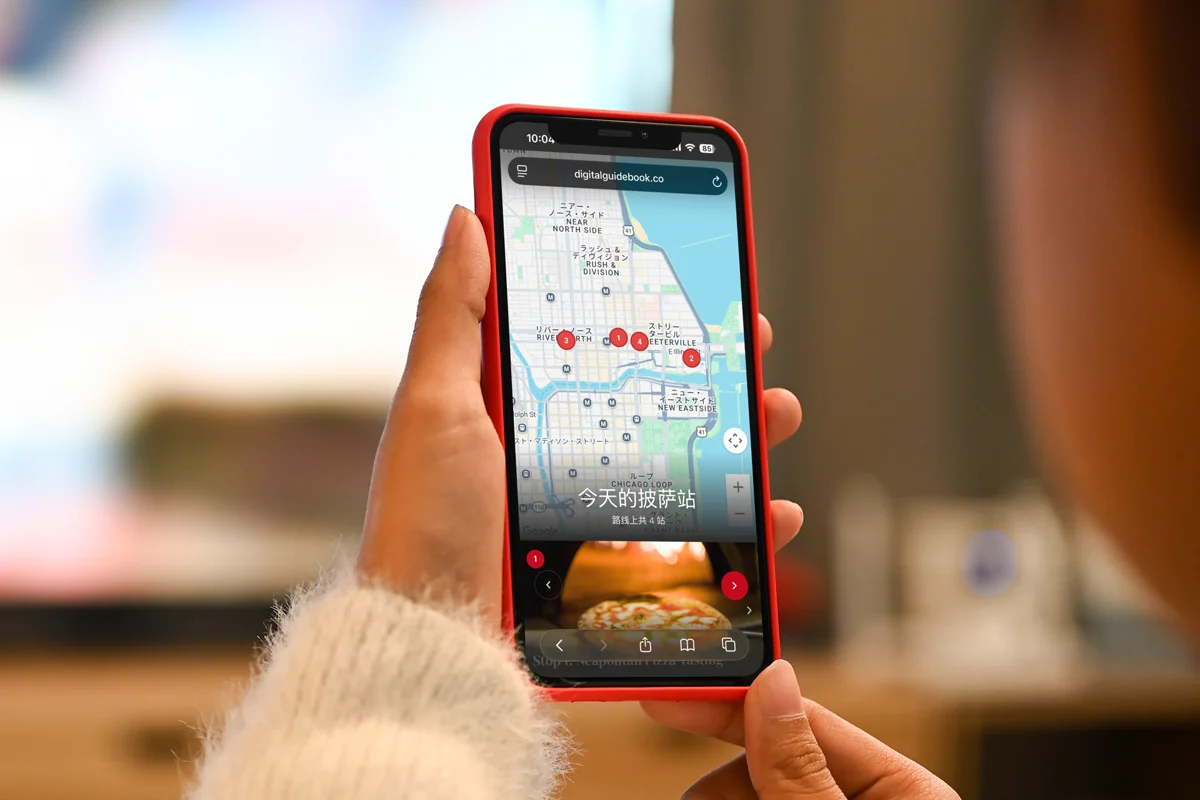
The map is the exception that makes the rule. Everything Google puts on it, the labels, the controls, the little instruction about using two fingers to move around, all of that arrives in whatever language your guest picked. The venue you are sending them to keeps its name. So they can read the map and still say the right thing when they get to the door.
It is already on
Every guidebook in your account has this switched on right now. You do not need to do anything, and there is nothing to set up.
If a particular guidebook should stay English only, you can switch it off for that one guidebook without touching the others. Translation only happens when a guest actually asks for a language, and the result is kept afterwards, so the second guest who wants German gets it instantly.
The awkward parts, in their language
There is a version of this that matters more than the stop descriptions, and it is the pages nobody enjoys asking about.
Tipping is the obvious one. What is expected, whether it is expected at all, how much would be normal rather than insulting: all of that changes completely depending on where somebody grew up, and there is no polite way for a guest to ask at the end of a tour they enjoyed. Plenty of people would rather guess badly, or not at all, than risk getting it wrong out loud.
Your tip page is your explanation of how this works on your tour. It now reads in their language, which means the guest who was quietly unsure has an answer, without having to ask anyone for it.
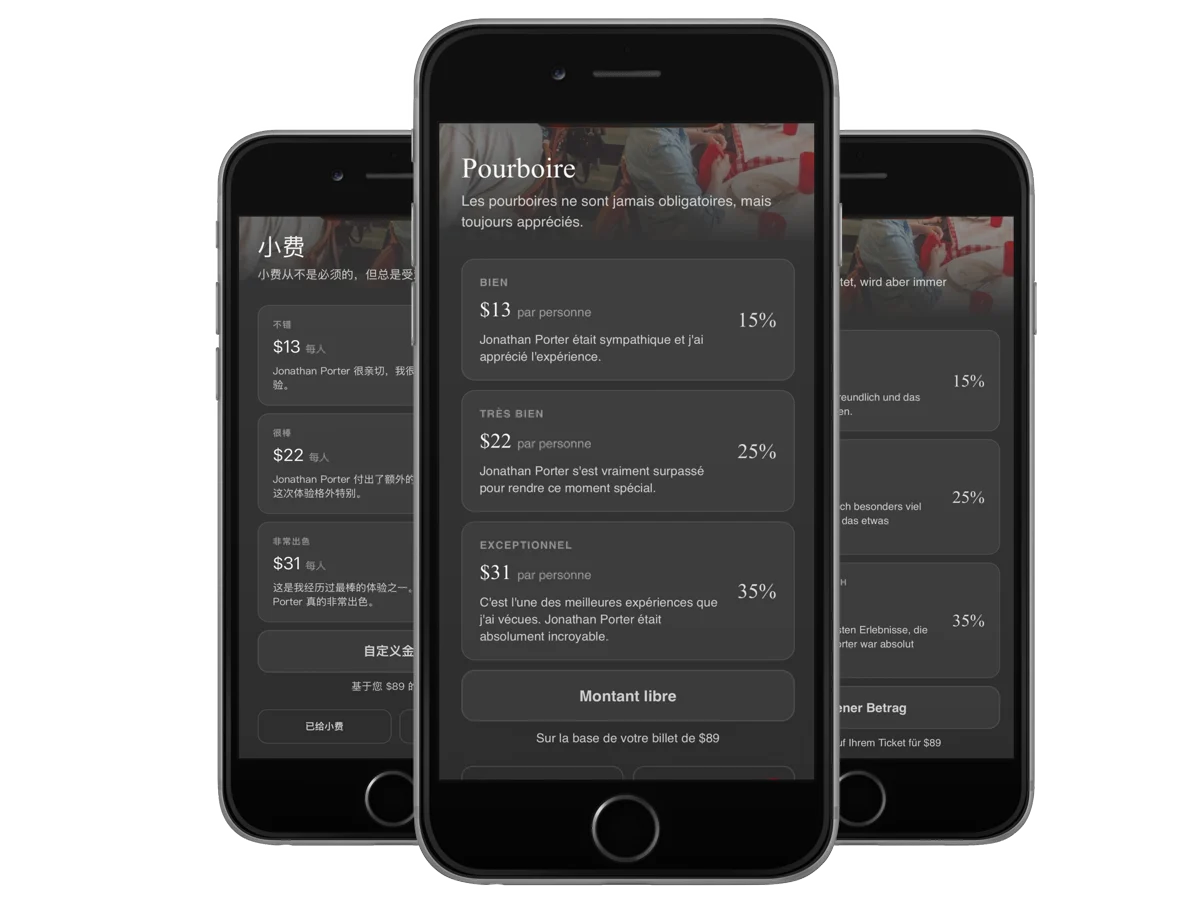
The same goes for your review page, your allergy notes, your meeting point instructions. The pages where a misunderstanding actually costs somebody something.
Add Several Places, for Founding Members
Nobody asked for this one. It came out of conversations with Shannon Largen at Walk Eat Nashville and Mike Huberty at American Ghost Walks, both of whom were stuck in the same place: they knew exactly which venues belonged in their guidebooks, and getting them in was the part grinding them to a halt. Not the writing. The filling in.
Because until now, the way you did this was to go ask Gemini or ChatGPT to dig up the details on twenty places, wait, then copy and paste each one into the right field. Address here. Phone there. Hours, if you could find them. Twenty times. That is not a workflow, that is a chore you invented to work around a gap in ours.
So now your Guidebook Editor does the looking. Tell it which city, feed it your list of places, add whatever you already know about each one, and it goes and finds the rest: address, phone, hours, price range, socials, a Google review link.
Anything it could not confirm against a source is flagged rather than quietly filled in. You see which fields to check with the values right there, and your dashboard keeps a count until you have looked at them. A place it could not find says so and offers to try again, instead of sitting there empty and leaving you to guess.
You will still have to find pictures for each place. Nothing I can do about that one. But going from zero to a guidebook worth publishing just got dramatically shorter.
This one goes to Founding Members first, which is what Founding Member means.
Also in this release
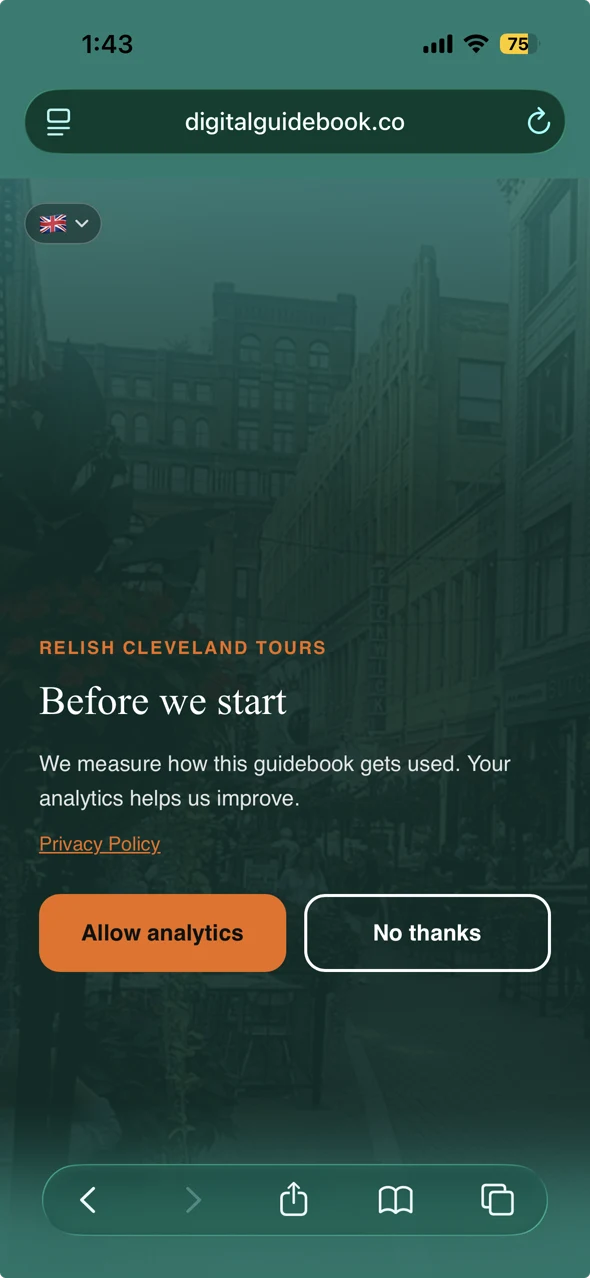
A rebuilt consent screen. Here is the thing about consent on the internet. The entire web decided, collectively, that the way to handle it is a pop-up. Something that slides up from the bottom and covers your content and looks like it was bolted on by a plugin somebody installed in a panic, as though the need for consent were a surprise that just turned up one morning. It is not a surprise. We know we need consent from guests in the EU and elsewhere. We have known the whole time.
So we stopped treating it like an interruption. It is a page now. In your brand, in your colors, sitting in the flow of your guidebook like every other page, naming you as the one asking, because you are. Two buttons, equal weight, no dark patterns, nothing that looks like a janky third-party ad demanding permission before you are allowed to continue.
Guests who say no are also no longer measured at all, where previously declining only removed part of the record. Your totals still count them, through a daily tally that identifies nobody.
Adjusted capture rates. Email capture rate could read above 100%, which is impossible and was a symptom of counting arrivals only when a guest passed through the cover page. Arrivals are now counted wherever a guest enters, including a deep link straight to your tip page.
Coupons and place links in the right language. A coupon expiry date read "Expires" in English under German copy. Buttons like Menu and Reservations stayed English too. Both now follow the guest.
Maps in the right language. The map on your stops page follows your guest's language, right down to the instruction about using two fingers to pan.
What this is really about
This is an accessibility feature, and I want to be plain about that rather than dress it up as a growth one.
It is the same category of effort as learning to say someone's name properly, or using the pronoun they actually use. Small, specific, entirely within your control, and it tells a person they were expected. That someone thought about them before they arrived.
Most of you run tours in cities people travel to. Someone who booked from Madrid or Tokyo or Sao Paulo has been reading your guidebook in their second language this whole time, translating your jokes in their head, working harder than your other guests to get less out of it. Probably missing the exact bits that make your tour yours.
This is not Unreasonable Hospitality. It is just hospitality. The ordinary kind that most of you are already extending in a hundred ways I see every week, in how you handle a guest with a mobility issue or a kid who is bored or somebody who showed up in the wrong shoes.
Now every tour can offer something to a guest who is not a native speaker, instantly, with no setup and no cost. You were already doing the welcoming. This just hands you another way to do it.